Monday, 5 December 2016

"Wine Time"


"Wine Time" is something I (try to) encourage (some might say enforce) in my own household, with some success, and also when I'm out with friends and I've either brought a good bottle of wine, or bought one from the restaurant's wine list. Even "not so good" and "no so expensive" wines deserve, I think, their 2 minutes of concentration.

I know, I'm a horrible person.


Essentially "Wine Time" is quite simple - it's 2 minutes (only 2 minutes, who can begrudge that?) when you try to concentrate only on the wine - without distractions.

  • You don't chat except about the wine.
  • You don't watch the telly (even if Benfica are playing).
  • You don't listen to music.
  • You don't pick at the entrées.
  • You don't look at the menu.
  • You don't Facebook, or twoot, or twit, or instagroove, or text, or do any of those supposedly "social" things on your phones.

You try to concentrate only on the wine.

Just for 2 minutes.

Why?
I've found that, if you don't, it's just so very easy to sip, and drink, and quaff and not really notice what the wine actually tastes like and then suddenly it's gone. You think you probably enjoyed it, but you can't really remember.

Why?
Quite a lot of work goes into making that bottle of wine...
Back in 2004 (today's wine, as I write this, is a 2004) people went out into the fields and they picked grapes, quite probably by hand, quite possibly at night, maybe in high temperatures. These grapes were taken, possibly up a steep hill, to some form of transport and thence to a sorting station where someone sorted the grapes. Then they were carefully squished, fermented, racked, left to sleep, blended, bottled, labelled, packaged, transported and only after all that did they end up, as a "bottle of wine", on the shelf where you bought it.

Given all this work, not to mention the hard earned euros you've paid, I just happen to think that 2 minutes isn't too much time to give to that bottle of wine.

Thursday, 1 December 2016

Vinhos Sogrape - Terra Franca - 2008

I've been to web sites, and blogs, which posted seemingly endless notes about wines which had, as far as I could tell, very little to commend them. Frankly I couldn't see the point, and I stopped reading them.
So I decided with my little cyber-effort here to adopt the Confucian approach "Speak only if it improves upon silence" - you'll see notes only about wines that are special in some way or other.

There's an old expression of which I'm sure you're aware - "you get what you pay for". In the wine world, as in most places, this is largely true - but once in a while you find a wine down on the bottom shelf (although, strictly speaking, this particular example was on a middle shelf), that's way better than its price tag would lead you to believe.

This I bought in Continente this morning - when I see a wine with some bottle age I'm generally willing to give it a go - with no expectations - but this surprised me with its delicacy (which is very different to frailty). When I'm next there, if they still have it, I'll score a few more, even without the discount - there are times when a wine such as this is just the ticket.

4 hour decant. 12.5%.
This was 1.99 euros before the 15% discount and, for that price, this is pretty good - sure, it's "vinho da mesa", but it's not aggressive, as cheapies often are - red fruits, nice balance, supple - fair finish with a background hint of sour.
88

Monday, 28 November 2016

Rating wines - what's a point?

Everywhere you look these days, wines seem to have an associated "rating" - so what's that all about and, in particular, when you see a points rating on my blog, what does it mean?

Somewhat unhelpfully, there are a number of different ratings scales for evaluating the "quality" of a wine - Revista dos Vinhos, for example, the Portuguese wine magazine, uses a 20 point scale.

In many other (I'd hesitate to say "most", although it probably is) cases a 100 point scale is used. I use the 100 scale, popularised by Robert Parker in the 1980s, so that's what I'm going to talk about. You might think, logically, that a terrible wine would score somewhere near zero, and a really great wine nearer 100.

Wrong!

Whilst every fibre of my being, as a mathematician, rails against it, the lowest score for a wine on the 100 point scale is 50. Yes, 50.

Bands between 50 and 100 are usually described along the following sort of lines...
  • 50-69 Rubbish - quite possibly undrinkable 
  • 70-79 Pretty crappy 
  • 80-85 Good 
  • 85-90 Very good 
  • 90-93 Excellent 
  • 94-97 Outstanding
  • 98-100 Awesome
(To read a more "official" version from Robert Parker's "The Wine Advocate" - look here)

But why on earth do I care, or should I bother to score myself?
Fair question.
You should care because it gives you some idea of how good a wine is - you see an 85 point wine and you might be tempted to think of this in terms of a percentage - that this is, somehow, better than 84% of wines, which it simply isn't - an 85 point is wine is "just" a good wine.
Of course you don't need to score yourself, but it does provide a focus for your tasting - ultimately you're going to have to give it a number, which helps to concentrate the mind. It will also help when, in 2 years time, you're in a wine shop having tasted (and rated) 1000 wines to give yourself an idea as to whether or not you thought that was a good wine when you tasted it (and whether it's a good buy in the "only 5€" section, for example).

OK. So we should probably discuss some of the "problems" with the whole points rating system...
  • People have differing opinions. Of course. Robert Parker, for example, was often criticised for his liking of "fruit bombs" - big, powerful, fruity, often quite alcoholic wines. Other reviewers disagreed, favouring lighter, more acidic, subtle wines. The solution to this "problem" is simple - know your reviewer, or at least get a feel for how their taste stacks up against yours.
  • Points rate wine quality, which is nothing to do with your taste. The most extreme example of this, for me, is white wines - I simply don't much care for them - so what's a 91 point white to me? An excellent wine I probably won't like.
  • The Price effect. From my viewpoint, the "quality" of the wine is absolute - regardless of whether I paid 2€ or 200€. Others, however, take cost into consideration - I think this is wrong. An 89 point wine costing 2€ is better value, but simply not as good a wine as a 91 point wine costing 200€. Value, or otherwise, belongs in the text section of the note, not in the number. Sometimes, of course, hand on heart, that's hard to do - it's difficult to "admit you were wrong" in having paid 60€ for a wine and then rating it at 82 points.
  • Consistency. Perhaps this isn't a problem with professional reviewers, but I'm pretty sure it is for me. I have good days and bad days, happy days and sad days and my view of the wine in the glass varies. I try to fight it, but I don't always win. Consistency over time is difficult too - 4 years ago I might have rated a wine 90, since I knew (had tasted) no better - that same wine might get 86 now, or even 92, if it was, in fact, an excellent wine.
  • What exactly is being rated? This is a bug-bear for me, and something often discussed on sites like CellarTracker. Some people rate what's in the glass (I'm one of those), and some people rate what they regard as the potential of what's in the glass (clearly they are witches or warlocks and know how a wine will develop over the next 25 years). I rate what's in the glass and, if I think the wine will improve, I'll make a comment in the associated text - I think everyone should do that. For this reason, amongst others, a tasting note consisting of only a number is nearly worthless unless you know the reviewer.
  • Wine ratings affect future wines. The problem here is that when too many people start buying what the reviewers "recommend" (i.e. their highly rated wines), other wine producers have a tendency to change their techniques or production in order to produce wines more similar to those (i.e. wines that will get similarly high scores). Arguably why not - highly rated wines are more in demand and therefore command higher prices. But this isn't good for wine production - a range of styles to suit different tastes is required. But I personally don't fret about this - no-one cares except me about my ratings.


I conclude with a few personal observations about my tasting notes, and the rating that goes with them...
  • I do to tend to score more highly wines that I like, wines with a lip-smacking moorishness that I call "yummy"  rather than to attempt to judge "wine quality" in absolute terms - I simply don't have the palette for the latter, nor the range of experience, nor the budget to try that Margaux, or Grange, or Petrus, or Screaming Eagle, or whatever to find out if those wines really are 99+ points wines. Will I ever get to try one of those fabled 100 point Noval Nacional Port Wines?
  • 90 points is the "breakpoint" for me. Below that is a decent enough wine, and possibly good value for money, but, aside from the odd daily drinker if they're great value, or wines I think might well improve, I don't buy those again - there are enough wines I haven't tried yet, and always will be. I might buy more of wines I've rated at 90 or above, depending on the price, and how long I think they might last.
  • I don't rate white wines. Once in a while one crosses my path and I write a tasting note, but I don't have the experience, or interest, to score them.

Friday, 25 November 2016

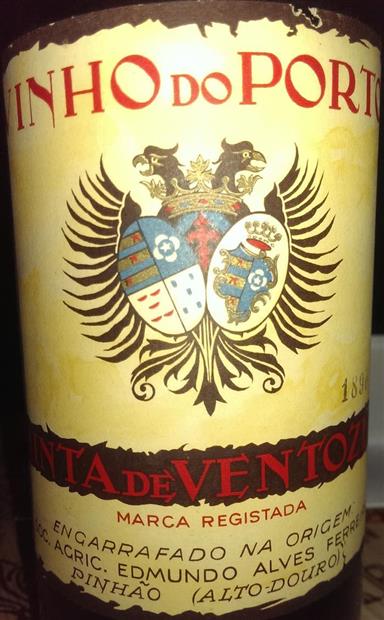
Quinta de Ventozelo - Porto Colheita - 1890


It's rare that mere mortals such as myself get to drink a wine of this age and acquiring it at an auction with unknown provenance was always going to be a risk.

But it was a risk I decided to take.

Ultimately a wine is only as good as it tastes, but with a rarity such as this there is, and should be, an intellectual element, so I did a little research to try to put a 126 year old wine into context.


1890...
  • The year of the British Ultimatum, and the treaty of London
  • The massacre at Wounded Knee
  • The death of van Gogh
  • The birth of Agatha Christie, Ho Chi Minh, Man Ray, Groucho Marx
  • Queen Victoria still sits on the English throne Portugal still has a throne, and Carlos I sits on it;  Benjamin Harrison is President of the United States
  • Coliseu dos Recreios opens in Lisbon
  • No easyJet, no jets, no aeroplanes even
  • No FaceBook, no internet, no computers
So - what was it like? Here's my tasting note...

4 hour decant. An 1890 barrel believed to be bottled in 1932. Bottom of cork very much stuck.
Decent at pop time but, when I poured 8 glasses of this to start my birthday dinner (no, I'm not 126 years old!), this had become an amazing wine - deep, clear, honey colour - smooth, oh so incredibly smooth - gentle warmth, with no real noticeable alcohol - nuts, an almond, hints of peel - so much going on - and a finish that lasted and lasted. We left the (empty) glasses on the table as we moved to wine, but the aroma was all pervasive. Truly a privilege.
98

Wednesday, 23 November 2016

Altas Quintas - Obsessão - 2007

I've been looking to drink a bottle of this for a while, so I took myself to the Adega yesterday and scored myself a case of this, amongst other delights.
One really has to wonder why I waited so long!

3 hour decant. 14%. Alicante Bouchet and Trincadeira.
Deepest inky purple - freshness and blue grapes in the nose - long silky legs - very much "yummy" in the mouth - full, lush, sexy, ripe - stylish without being snooty - lovely balance around firm tannins and fresh acidity - delicious wine with a huge finish.
92

I was told the 2011 is currently "sleeping" - when that's available, you can be sure a few cases of it will make their way to my cellar.

Tuesday, 22 November 2016

Altas Quintas


It was my pleasure today to visit the winery of Altas Quintas - 60 hectares of vines producing around half a million bottles of wine a year - nestling at 600m of altitude near Alegrete, in the foothills of the Serra da São Mamede Natural Park.
Of course, wine geeks like to go on and on about terroir, which the wikipeople define as "...the set of all environmental factors that affect a crop's phenotype, unique environment contexts and farming practices, when the crop is grown in a specific habitat". It's the sense of "place" that you can, sometimes, taste in a wine.

The terroir at Altas Quintas is special - the altitude, the particular microclimate in that particular area, the soil type - these lead to wines of especially high acid levels - and to particularly elegant wines of which I've long been a fan - sometimes you'll see them in restaurants, sometimes in supermarkets, and in many fine wine shops - if you get the chance, try them.


Having made an appointment (always best), I was expecting to buy my wine and be on my way, but I was treated to a small tour of the winery - the huge fermentation barrels in oak and stainless steel, the bottling room etc etc - and even to a taste direct from the barrels of the 2015 Alfrocheiro (a bit bready, but light and stylish even now), and the 2015 Syrah (a newborn infant, but you could taste the potential) - I was told these would probably be released in a few years under the "Mensagem" (message) series - I'm a Syrah fan and several cases of this have my name on them.

I bought...
  • a case of Obsessão 2007 - a wine I've only ever had once, at a tasting a couple of years go, and the principle target of this visit - that's in the decanter as I type - the first sip was lovely - tasting note later this evening
  • a case of Reserva-DO 2007 - the 2005 was a very fine wine and I expect this to be even better
  • a case of Mensagem de Cabernet Sauvignon 2008 - a nice wine with a light and delicate touch


There's something special about buying wine direct from the producer rather than from a retailer, and it's something I like to do as often as possible - when we drink this wine we'll be reminded of the gentle, cold breeze of this November day, of the views over the vines to the hills of the Serra, Sara's smiling face, the smells in the barrel room... wine is so much more than liquid in a glass.

Money duly exchanged for nectar we headed home.


Altas Quintas on the web
GPS: 39°16'12.0"N 7°22'21.0"W

Saturday, 19 November 2016

You simply must decant

Broadly speaking, there are 3 reasons to decant wine before serving...
  1. To remove the wine from the sediment - as wine ages chemical changes take place, some of which result in sediment at the bottom - and you just don't want this stuff in your glass.
  2. To let the wine breathe - more below.
  3. To let some bad aromas "blow off" - some wines can actually smell quite bad when you first open them - decanting helps these bad smells to dissipate.


I think that people have the wrong idea about decanting - that for some reason it's regarded as some kind of high-class snooty thing that fancy restaurants do, or something you only do with an expensive, old wine.
Wrong!
The simple fact is that just about every wine tastes better if you've given it some time to breathe - to react with the air and "open up" - yes, even 5€ wines improve if you give them some time before drinking.
If you don't believe me - try it. Pop your cork and carefully pour the wine into a decanter (or jug if you don't have one) - stop when you see in the neck of the bottle that the liquid is no longer clear. Pour a little into a glass, swirl it around a bit, sniff it, and taste it - concentrate on the sensations. Then wait a few hours and do the same - very often you'll find that it's a totally different wine - a better wine.
A couple of weeks ago it was my privilege to drink a bottle - my last - of Avó Sabica 2004. I popped the cork 3 hours before dinner - the wine tasted of absolutely nothing - I sipped again - nothing - I checked with my wife - nothing. But after those 3 hours it had changed completely into an amazingly beautiful wine.

"Can't I just open the bottle and let it sit for a while"?
No.
Look at the top of the bottle - there's almost no contact between wine and air, so almost no breathing takes place. On the contrary, in a decanter there's a lot of wine to air contact - lots of breathing.
You'll see other people recommend this method - they'll call it "slow-ox" (slow oxidation). My experience is that this simply doesn't work for wine or port, but, rather strangely, works better for Moscatel than decanting.

"I got home late and didn't have time to decant."
Of course, in this situation you will have picked a cheaper wine. Splash the wine into the decanter - you're trying to get as much air to wine contact as possible. If you have a funnel to hand then, having washed out the bottle, pour it back and decant it again. Whilst not ideal, this can certainly help improve the wine and will be 5 minutes well spent.

"Surely I've got to have decided what I'm going to drink ahead of time"?
Errr, yes - no way around that.


"How long should I decant for"?
Now there's a good question. My default is 3 hours for red wine, and at least 8 hours for port - I'll give young vintage port 18 or 24 hours - it really does make a huge difference. I tend to give "bigger" or "heavier" wines a little more time, and "older" wines (20 years+) a bit less. Very tannic grape varieties like Baga or Ramisco a bit longer. I think Syrah likes a long decant.
If you assume that it will take you a couple of hours to finish the bottle, try to concentrate on that last glass - is it better now than it was when you started? If so, try to remember (or, better yet, write a tasting note), and when you have the same wine again give it more time.

"I only paid 2€ for this bottle, is it really worth the bother"?
Absolutely - if you can make a 2€ wine taste like a 4€ wine you've doubled its value!


"What about in restaurants"?
This really depends on how classy the restaurant is, and how good their wine list - any restaurant expecting you to pay 200+ € for a Barca-Velha or Pêra-Manca ought to expect to serve it in the very best way possible - carefully decanted. Ask before you order - if they can't decant it, just don't buy it! I personally wouldn't pay over 30€ for a wine that a restaurant won't decant.
What isn't on your side in a restaurant is time - you're unlikely to want to wait 3 hours before you start eating, and the waiters probably wouldn't be that happy either. After the wine is decanted, take a very small glass - swirl it around a lot - sip slowly until the wine has had at least some time to open up - swirl the decanter from time to time as well since that will help.

"What kind of decanter should I buy"?
Excellent question and one I'm so very pleased you asked.
Obviously there are issues of style and taste here, not to mention cost. But what you shouldn't forget is that "Form Follows Function" - the main aim of a decanter is to air the wine so, no matter how beautiful (or expensive) the decanter, if it isn't doing that then it isn't doing the job, and your wine isn't getting the air it needs to be the best it can.
And the key here is for the wine to have significant contact with the air.
For a long time I used this most beautiful decanter from VistaAlegre...
I proudly showed a picture of my wine in this to a drinking friend of mine (doffs hat to André over in Cologne), who pointed out to me that, since the wine filled most of the volume of the thing, I actually wasn't getting very much wine to air contact - in short, that it wasn't working very well.
But I very much loved this decanter (and still do), so I resisted. He then suggested I buy a cheapie decanter and run a test, which I did. I decanted half a bottle from a Magnum (1.5l = 2 bottles) into my beautiful decanter, and the other half into a decanter I bought, for about 5€, in the local supermarket.
After the requisite 3 hours both my wife and I each did a "blind tasting" - comparing samples from both the decanters, without knowing which was which.
We both agreed that the wine tasted noticably better from the cheapie, which looked something like this...

With a bottle of wine in this beastie, it comes up to the widest part of the bowl, providing a lot of air to wine contact, which is what the doctor orders.
I've bought a few decanters since then - always with a principle focus on their function.

I still sometimes use my beautiful decanter - if we have guests I might move the wine from a cheapie into it, or possibly for a bottle of port I'm expecting to last a number of days (although that's rare).


"I want to take some good wine to friend's for dinner"
No problem - use your decanter as if you were going to drink the wine at home - just before you leave, pour the wine back into the original bottle, which you've washed out and re-insert the cork, or use one of the wine-bottle closure gizmos. This is sometimes called "double-decanting".